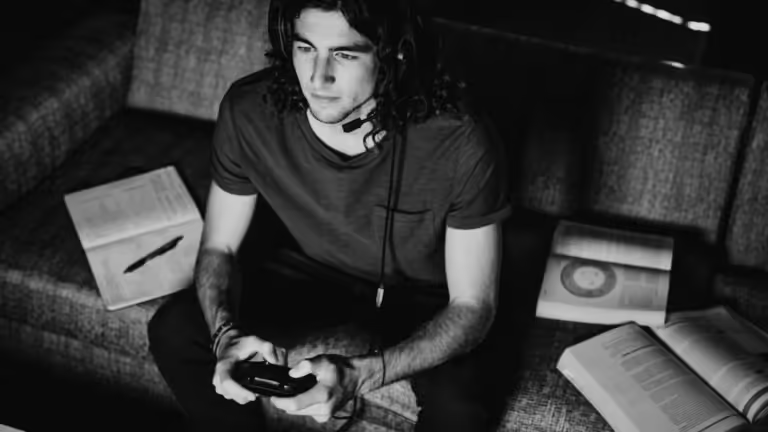
For many, gaming is a source of entertainment and community, but for some it can become a destructive escape from reality. One young man shares his story of how gaming went from being a hobby to an addiction that exacerbated his depression - and how he found his way out.
Gaming as a refuge - the start of addiction
His passion for gaming started early. "I've always played games, since I was 8 years old," he says. But it was in 9th grade, after he moved to Oslo, that gaming began to take on a stronger role in his life. "Then gaming became my refuge," he says. For many young people, gaming can be a way to find security in a new life, but for him it developed into something far more serious.
The insight - when gambling became part of the problem
It wasn't until he got help for anxiety and depression that he realized gaming was part of the problem. "When I got help from the psychologist, we realized that I had a gaming problem that led to depression," he says. This realization was a turning point for him.
For him, the connection between gaming and depression was clear. "When gaming was at its worst, depression was also at its worst," he says.
The impact of gaming addiction - an isolating reality
Gaming's effect on his life was evident in his relationships with loved ones. "I only prioritized work and gaming," he says, admitting that it often took a toll on family holidays and birthday celebrations during his teenage years. He chose to stay at home to play instead. "But now that I've stopped completely, it's much better," he says.
The biggest negative consequence of gambling was depression. "When the depression was at its worst, I didn't want to live anymore," he says honestly. Despite socializing with friends on Discord, he often felt lonely. The health risks were also high: he only slept 3-5 hours a day during the week and spent weekends sleeping and gaming. "My eating habits were nothing to brag about either," he adds.
The turning point - when everything had to change
It was during treatment for anxiety and depression that he realized that gaming was the underlying cause. "I figured it out while I was getting help for my depression, and I didn't want to go back there. So I quit gaming back in the day," he says. For him, there was no other solution than to stop gaming altogether.
It wasn't an easy decision, but it was a necessary one. "I didn't want to feel so alone and miserable all the time," he says of the turning point.
The tools that helped - support from friends and honesty
For him, honesty has been the most important tool in the fight against addiction. "I've been honest about the problem I have," he says. He also mentions the importance of the support he has received from his loved ones, including a friend who introduced him to the Gamblers Anonymous group. "Don't try to regulate your gambling, it doesn't work," he warns. "Just like alcoholics can't regulate their intake, the same goes for gaming."
A brighter life - after the grip of gaming
Today, he has found new ways to fill his life. "My life is much better now. I have a brighter outlook on life and have become closer to my friends," he says. He has replaced gaming with anime, books and exercise, and participates more often in social activities with friends and family. "I'm not as aggressive anymore, my eating habits have improved and I have a better circadian rhythm."
For the man who battled his gaming addiction, life is now filled with new possibilities. "I look forward to a future without gaming, where I can continue to improve myself and the relationships of those around me," he concludes with a smile.

Do you have any questions or want to talk?
Feel free to contact us on the Helpline, via email or the contact form.