When “Oskar” was in his teens, he started spending money on virtual gear and in-game wonder boxes – so-called “skins” and “lootboxes.” He soon found sites where he could gamble with the gear, even though he was under 18.
– For me, it all started when I started playing on the internet when I was 12-13 years old, says the man, who is now in his late 20s.
"Oskar" is not his real name.
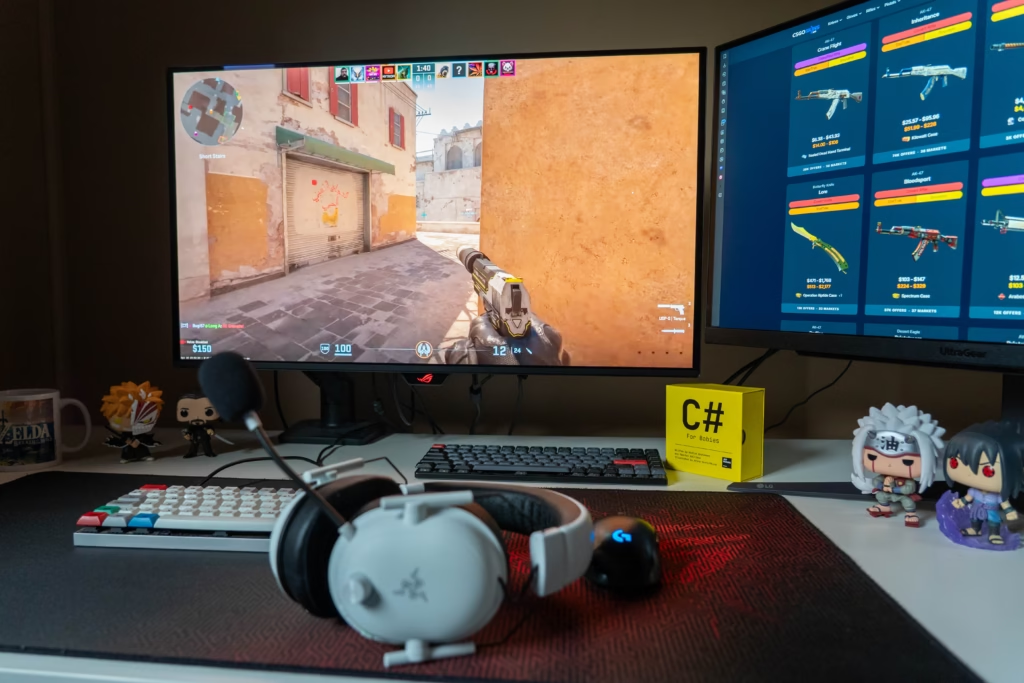
– In the game there were so-called "skins", cosmetic items that change the appearance of the weapons you use. Skins have different values depending on, among other things, how rare they are, and you can both buy and trade skins, he explains.
Gambler with skins
Maybe it starts with the young person wanting a skin as a birthday or Christmas present, getting it and using it in the game.
– But then there is another dimension to it all, namely that there are third-party sites online that enable gambling with skins – everything from roulette to coin toss. These sites are almost exactly like casino sites, and were easy for me to access, even though I was under 18 years old, says “Oskar”.
Here he could upload skins, and get coins that could be used as currency on the site. The value of skins can change over time, and some people buy skins as investments in the hope that they will increase in value.
– It will almost be like a stock market.
Unknown to parents
On behalf of the Norwegian Gambling Authority , a nationally representative school survey on gambling and computer gambling problems was conducted in the spring of 2025 under the auspices of SPILLFORSK in collaboration with the research group Social Influence on Youth Behavior (SIPA) at the University of Bergen.
The survey showed, among other things, that:
- 29.4% have purchased skins (11.5% girls / 46.2% boys)
- 15.5% of high school students have participated in gambling where skins are used as a bet (8.4% girls / 21.4% boys).
Skins occur in several different games and game worlds, and "Oskar" believes that everyone who plays these games is familiar with skins and knows that they have different values.
– But for many parents this is completely unknown. I think many players find it cool if someone has an expensive skin. It's a bit like the brand pressure has moved from the schoolyard and into the gaming world, he says.
From computer games to gambling
Gambling addiction Norway is well acquainted with the gambling aspects of the gaming world.
– Right now we see that there are a lot of young men contacting Spillvenighet Norge. These are men who have managed to get old enough that the demands of reality have started to catch up with them. They see that they need to have funds to establish themselves, and discover that the money they should have saved or put aside has gone to gambling and gaming, says Magnus Pedersen at Spillvenighet Norge.

– They may have spent money on gambling for many years, but it is only when they are adults and have to face the consequences of their choices that it begins to be felt.
Magnus believes that some young people today are almost groomed into gambling via computer games.
– Many people have played games since they were little, perceive it as a safe arena for fun and play, and take advantage of the opportunities and offers in the games without seeing anything negative in it. They don't think that the functions that allow for the use of money are not something they should be doing. Especially not if the whole gang of friends is doing the same, he says.
More findings from "Youth Survey on Money and Gaming Problems in Norway 2025"
- 97% of boys and 81% of girls aged 12-17 play computer games
- 19% of young people aged 12-17 have gambled in the past year
- 27.7% have purchased loot boxes in the last year (9.3% girls / 44.9% boys)
- 45.3% have participated in games that are similar to gambling, but without using real money (32.1% girls / 57.6% boys).
Wants a ban on "loot boxes"
Game Addiction Norway wants an end to gaming companies making money from gambling in games. In January of this year, they and 12 other Norwegian organizations joined forces to demand a ban on so-called loot boxes . It was Actis – the Norwegian Drug Addiction Cooperation Agency that took the initiative for the petition.
After the Storting's Family and Culture Committee had considered the White Paper on Safe Digital Growing Up, they made the following recommendation in February this year: "The Storting asks the government to consider a ban on gambling-like elements in computer games, including loot boxes, and to return to the Storting no later than 2027."
At Actis you can read more about loot boxes.
– That's not what the games are really about – everything from loot boxes to wheels of fortune and other things that encourage gambling, he says.
Magnus says that the fact that Game Addiction Norway is now experiencing contact from more and more young men is consistent with what is seen in other countries as well.
– We are also seeing a clear increase in those who say that their story began with gaming. I hope that they come to us because they see that we are not here to judge, but to help.
What is a "loot box"?
- Virtual boxes in computer games with random rewards.
- May contain clothing, weapons, figures, or other digital items.
- Can be earned in-game or purchased with real money.
- The player does not know in advance what the box contains.
Went to gambling
When "Oskar" turned 18, he switched to regular gambling and casino sites. He received a sum of money from his parents that they had saved up for him, and he spent this on gambling.
– At that time I was already very into gambling as I had gambled with skins before. I had already got a taste for the dopamine rush you get from winning. If you won a few thousand kroner as a teenager, you were the king at school and could take your friends and have lunch at McDonalds, he says.
"Oskar" experienced at this time that he was living a double life: He sat and played games in the basement of his parents' house, and was apparently happy and content when he came up to eat dinner.
– But when I went back down to the basement, I was in a really bad state. I borrowed money privately to finance the gambling, and eventually it stopped. People wanted their money back, and eventually the amount I owed was so high that I had to get help. By then I was so far down in the dumps that I realized I had a problem, he says.
– Have an open dialogue
When "Oskar" told his family that he was addicted to gambling, his parents were completely taken aback. They were unaware of the sites that allowed young people under 18 to gamble, and had no idea that their son had spent a lot of money on gambling.
– It is difficult for parents to detect. My advice is to keep track of where their children's money goes as best as possible. Of course, many can play games without it leading to gambling and problems. I think the most important thing is for parents to follow up, show interest and ask their children questions about the games they play, he advises.
– If the kids start wanting skins or money for skins, I think you should pay a little extra attention.
Magnus from Game Addiction Norway agrees:
– The best thing parents can do is have an open dialogue with their children about what the money is used for. It is difficult to familiarize yourself with all the different games that exist, but fortunately there are great tools online that can help you. For example, you can read reviews of games on Barnevakten.no . They tell you if there is anything in the games that you as a parent should be aware of.
"Walked over sticks and stones"
On the other side of the country, “Patrik” faced some of the same challenges as “Oskar.” Today, he is a man in his late 20s, and “Patrik” is not his real name.
– I played a lot of computer games, but I wouldn't really say I was addicted to computer games. It was the gambling aspect of the games that I struggled with.
"Patrik" had also quickly become familiar with skins through gameplay.
– Skins have no function and are just cosmetics for the weapons in the game. At the same time, they can be incredibly valuable. I myself had a few skins when I discovered that there were websites where you could gamble with them. There were jackpots and roulette and I eventually got hooked. The first time I used these sites was in 2016, he says.
After a while, in "Patrik's" own words, things went downhill.
– Then I had access to a lot of money, which meant I had more to spend. It wasn't until my wife discovered my purchases that I actually added up the amounts.
It was known that there had been 300,000 kroner in circulation.
– I don't think I had fully realized the seriousness of it myself. My partner was very sad, disappointed and shocked and I decided after this to cut the game completely, says "Patrik".

Sold the PC
14 days after the "revelation", he chose to sell his PC.
– It was the only way for me to manage not to spend money on games. Almost all types of games today have offers within the games that cost money. It can be anything from subscriptions to skins, items and other things that are easy to spend money on. For me, it was easiest to cut back on gaming, and instead focus on other hobbies.
"Patrik" is clear that he thinks there's a lot of great things about gaming.
– I think that games and gaming are absolutely fantastic in many ways. It's social, you become a racer in English, you work on cooperation and team play, and it's a place where a young person who doesn't like, for example, football or cross-country skiing can fit in, he says.
– What makes it problematic is the spending. There is nothing stopping a 12-year-old from adding their parents' cards. In addition, there are gift cards for gaming services, and Paysafe cards. The latter I spent half of my weekly allowance on, every week.
"Patrik's" own experience was that his parents had no idea what was happening in the games he played.
– My advice to parents is to try to familiarize themselves with the types of games their children play. Parents should check if there are purchase offers in the games and do research on them. They should also talk to their children and take the time to familiarize themselves with what they are doing, he says.
Free to play
Today, both "Patrik" and "Oskar" are free to play.
– I looked for help online and found Game Addiction Norway. It was nice to talk to someone who understood and didn't judge. It could be people who had faced the same problem themselves. I also found it good to talk to someone I didn't know and had no connection to. We are almost like a family when we attend meetings, but when we leave the room we don't know each other, says "Oskar".
Magnus hopes more people will take the step and seek help.
– We don't want to take away people's joy in gaming, but we want to separate gaming and gambling. We believe that then a lot of problems will disappear, he says.

Do you have any questions or want to talk?
Feel free to contact us on the Helpline, via email or the contact form.